Showing posts with label The Surrounded. Show all posts

Thursday, March 11, 2021

Fort Castillo de San Marcos: Saint Augustine, Florida: March 11

Fort Castillo de San Marcos is a fort that was built by the Spanish in Saint Augustine to defend Florida as well as the greater Atlantic trade route. The Fort is also the oldest masonry fortification in the continental United States. 

For more information about the history of this site, please visit: https://www.nps.gov/casa/index.htm

-Artifacts-


Artifact #1


This is a photo of the draw bridge that leads into Fort Castillo de San Marcos. The bridge crosses a dry moat which is where I happened to be standing when I took the picture. Further, in the background, you can see the Fort flying its flag as well.


Artifact #2

This is a photo of the main guard tower of the Fort where guards would stand watch over the fort and city

-Exterior Photos-


Exterior Photo #1

This photo was taken just outside the Fort by the main entrance.


Exterior Photo #2

This photo was taken right next to the main entrance of the Fort of the Bay that the Fort overlooks.

-Images in conversation with the Site-


Image in Conversation #1

This is a photo of the Fort back when the moat was filled with water to attract more tourists to the site. However, as the Park Ranger, our class talked to explained, this water, damaged the Coquina that the Fort is built out of. This led the Park service to make the decision to drain the water and reinforce the base of the Fort. I thought that was an interesting piece of the Fort's history so I decided to include it as well as a photo of what the Fort looked like surrounded by water. Further, this photo is in conversation with this site simply because this photo highlights how many changes the fort has been through, throughout the years.


Image in Conversation #2

This is another historic photo of the Fort. In this photo, the United States Coast Guard is holding a graduation ceremony. The Fort and the city of Saint Augustine as a whole played a very important role in World War II. This image represents another chapter in the Fort's long history and that is why it is yet another image in conversation with this historic site.


-The English 202 Connection-

One concept from my English 202 class that relates to Fort Castillo de San Marcos, can be found in the book The Surrounded by D'Arcy McNickle. In the book, Archilde says: "When you came home to your Indian mother you had to remember that it was a different world" (McNickle, 3). This quote highlights the isolation that many native Americans have to live in while on reservations such as the one in the book. Further, Archilde's description of the reservation being a "different world" highlights that isolation. Further, on our tour, the Park Ranger talking to my class discussed how some members of the tribes of the Seminole, Plains, and Apache, were all at one point or another held as prisoners in the fort. This relates back to the book my English class was reading because the idea of the Fort being a prison for Native Americans is similar to how many of the Native Americans on the Flathead Indian Reservation (the reservation from the book) felt like they were being imprisoned as well. So I think that the parallel that can be drawn between this historic site and the book is one that highlights the contentious and complex relationship between Native Americans and the United States Government.

-Creative Component-


This is a photo that I took at the main entrance of the fort. With this photo, I increased the contrast and made it black and white to highlight the historic nature of this site as well as its beauty. I believe that the black and white and the contrast represent not only the rich history of this site but also the beauty of the site. This photo simply looks all around serene and that is what I was going for. 


Thursday, March 4, 2021

Government House: Saint Augustine, Florida: March 4

Government House is a historic property that is managed and ran by the University of Florida. At the Government House, visitors can find a variety of exhibits about the history of Saint Augustine and the state of Florida as a whole.

For more information about the history of this site, please visit: http://staugustine.ufl.edu/govHouse.html

-Artifacts-


Artifact #1

This is a photo of a Postcard that was on display inside the Government House. The postcard depicts the Alcazar Hotel which is now more commonly known as the Lightner Museum. 


Artifact #2

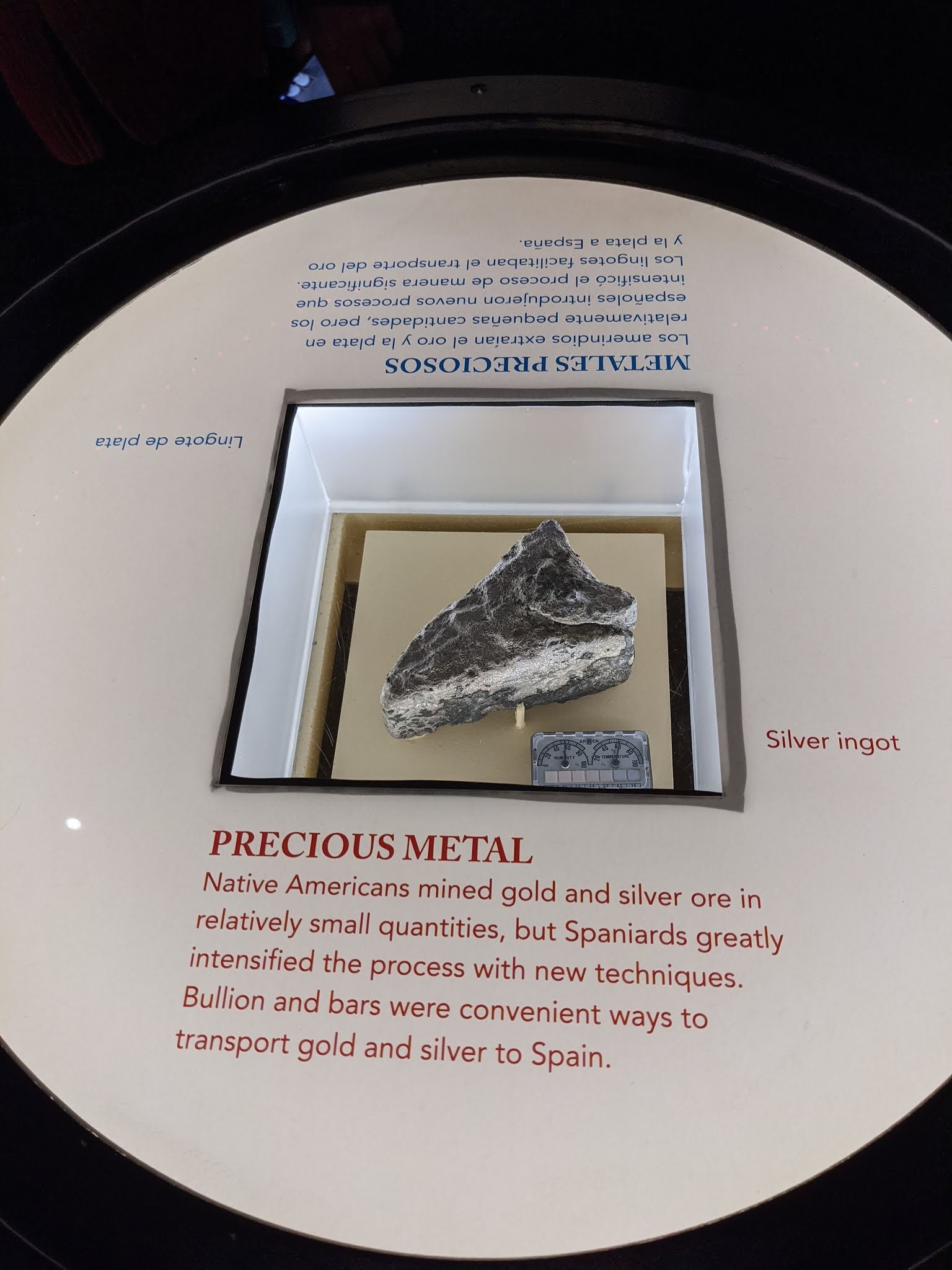
This is a photo of Silver Ingot which is something that the Native Americans and Spaniards both mined.

-Exterior Photos-


Exterior Photo #1

This a photo of the courtyard that can be found just outside of the Government House.


Exterior Photo #2

This is a photo of the balcony that overlooks the courtyard. From the balcony hangs a variety of flags including the Spanish flag, and the Union Jack.

-Images in Conversation with the Site-


Image in Conversation #1

This is an old photo of the Alcazar Hotel which is now the Lightner Museum. The reason I chose this photo and believe that it is in conversation with this site is because the photo on the postcard that was displayed in the Artifacts section of this blog post is of the Alcazar Hotel. So I thought it would be interesting and important to include another picture of the hotel.


Image in Conversation #2

This is a photo of Government House from a more historic time when the streets of Saint Augustine were still dirt. The reason that I chose this photo to be in conversation with the site is that I thought it was important to highlight the changes that the building, as well as the city, has gone through by presenting an old photo of what the Government House used to look like.


-The English 202 Connection-

One concept from my English 202 class that relates to Government House can be found in the book The Surrounded by D'Arcy McNickle. One concept that the book touches on a lot is the concept of preservation of culture, particularly Native American culture. One quote that exemplifies this theme of culture from The Surrounded is: "That was something he had forgotten to include in his visit- the old lady and her feasts! You gorged yourself on meat until you felt sick, and a lot of old people told tiresome stories." (McNickle, 4). This quote shows just one of the many cultural traditions that Achilde and his family participated in and it also shows that the tradition was able to be preserved. This is a concept that I think connects to this site because Government House's main purpose as a historic site is to preserve not only Florida and the city of Saint Augustine's history but also its culture and traditions. 

-Creative Component-


This is a photo that I took when I first entered Government House. I remember the house looking almost regal with all the marble and the general design and architecture adding to the regal effect. I wanted to emphasize this aspect of the site so I increased the contrast and made the image black and white. This provides an emphasis on the beautiful architecture that I was trying to emphasize with this image.


Monday, February 22, 2021

St. Photios Greek Orthodox National Shrine: Saint Augustine, Florida: February 18

The Greek Orthodox National Shrine is a living memorial to the first Greek settlers who moved to the American continent and a memorial to the Greek Orthodox pioneers who came to the new world for freedom.

For more information about the history of this site, please visit: https://stphotios.org/

-Artifacts-


Artifact #1

This is a photo that I found super amazing that was hanging in the shrine. The photo depicts a group ascending up a mountain for the feast of transfiguration. 


Artifact #2

This photo depicts a variety of items that are used for Holy Communion.

-Exterior Photos-


Exterior Photo #1

This photo was taken outside of the entrance of the shrine and depicts the signs that hang outside of the shrine.


Exterior Photo #2

This is another photo of the exterior that was taken across the street from the shrine. 

-Images in Conversation with the Site-


Image in Conversation #1

This is a photo from inside a Greek Orthodox church. I selected this image because it looked very similar to how the inside of the shrine looked. This is because the shrine had a very similar paint scheme as well as very similar colors.


Image in Conversation #2

This is a photo of Saint Photios. I selected this image because this is the saint for which the shrine is named after and so I thought it was important for people to be able to see the saint for which the shrine owes its name too. 


- The English 202 Connection-

One thing about this shrine that I find interesting is the fact that it is quite hidden away from the main street. In fact, I have accidentally walked past it a few times because it is so hidden. The reason that I bring this aspect about the shrine up is that I think it connects to a book that my English class is reading called The Surrounded by D'Arcy McNickle. The connection that can be made between these two is between the shrine itself and the Indian reservation in the book. The connection that can be drawn between these two places is the fact that both are little enclaves that preserve certain elements of cultures. For example, the shrine is rather secluded yet it is this seclusion that preserves elements of the Greek Orthodox culture. Meanwhile on the Indian Reservation in The Surrounded Native American culture can be more or less preserved since it is almost hidden from the rest of society and there is a certain level of autonomy associated with the reserve. This is not to say that Indian's being forced onto the reservations by force is the same as erecting a shrine voluntarily. But I believe that a connection can be drawn nonetheless. 

-Creative Component-


For my creative component, I edited a photo that I took while I was visiting the shrine. I edited this photo to bring out the very beautiful vibrant colors and blues that I really loved about this area. To do this I increased the contrast, exposure, and saturation. These edits, in turn, made the image more vibrant and made the image emphasize my favorite aspects of this area of the shrine. 


Fort Castillo de San Marcos: Saint Augustine, Florida: March 11

Fort Castillo de San Marcos is a fort that was built by the Spanish in Saint Augustine to defend Florida as well as the greater Atlantic tra...